
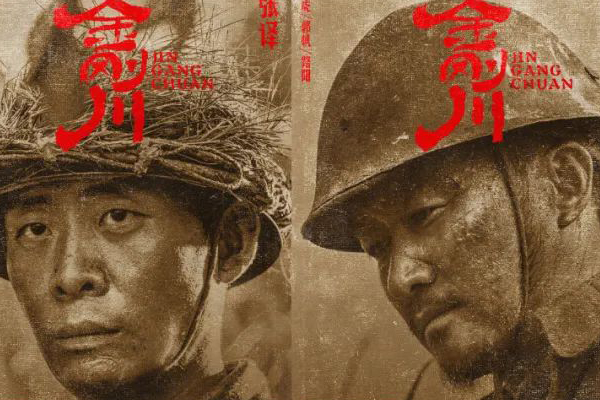
A controversial Chinese propaganda movie celebrating Communist victories in the Korean War will not be aired in South Korea after it encountered huge public backlash.
The Korea Media Rating Board (KMRB) approved the Chinese movie titled “Sacrifice,” or “Jin Gang Chuan” in Chinese, to be distributed in South Korea on August 30. After this decision was reported by the media in early September, the public grew outraged at the government’s movie rating regulator, which allowed it to be available online and on TV starting September 16. The movie glamorizes the Chinese Communist Army’s role in fighting South Korean and U.S. soldiers during the Battle of Kumsong, which was one of the last battles of the Korean War. Reportedly, the last line made by the main character is, “If we won this war completely and liberated the Korean Peninsula, wouldn’t the people [of both the North and South] be much happier than now?”
The importer and local distributor of the movie is Wisdom Film. It withdrew its request for approval to play it in South Korea on September 8. Minister of Culture, Sports and Tourism Hwang Hee told lawmakers at a session at the National Assembly that, “[the importer] withdrew its request for approval so it will not be aired.” The KMRB is under the oversight of the ministry.
Various conservative actors reportedly complained about the Chinese film to local streaming platforms. The platforms suspended the streaming service of the move indefinitely, which led Wisdom Film to withdraw its request for approval to the KMRB.
Minister Hwang admitted in front of the lawmakers that “it is true that domestic sentiment toward China and others among people in their 20s and 30s is perplexing [for us].” After conservative lawmakers asked him how it is possible to air a movie that glamorizes the Chinese Communist Army and has distorted facts, Minister Hwang replied, “I agree that it does not go along with public sentiment.”
Lee Jung-yeon, CEO of Wisdom Film, released a statement apologizing for its action. “I feel a strong responsibility and regret for importing a movie that is set during the Korean War, which was a national tragedy that took millions of lives and was caused by the North Korean invasion, without carefully reviewing the content.”
“I promise that we will never import a film that will cause such concern to the people,” he added. “I would like to apologize once again to the fallen soldiers and veterans who fought with all their might as well as their family members.”
The Korean Veterans Association (KVA) also released a statement condemning the government’s decision to air the movie. The statement came out shortly before the distributor of the movie announced that it withdrew its application to air it. The association has about 10 million members, and it is the biggest association of people who served in the military in South Korea.
“This is a move that China, who conducted an illegal invasion of the South with North Korea to make it a communist country, made to celebrate the 70th anniversary of its entry into the war to resist U.S. aggression and aid Korea,” the statement read. “It is just shocking propaganda material made by the Chinese Communist Party that tries to legitimize China’s invasion of the South and emphasize the bravery of their soldiers.”
The KVA added that they cannot understand the Moon Jae-in administration allowing such a movie to be aired while China is still imposing various restrictions on South Korean media in their country by making an issue of the deployment of the U.S. Terminal High Altitude Area Defense (THAAD) missile system.
“A victimized country allowing a propaganda movie made by the Chinese Communist Party, which was an accomplice in the Korean War, to be aired in the country is an act that humiliates South Korean and UN soldiers, as well as our fallen soldiers,” the statement said. “This will also weaken our alliance with the United States.”
The KVA also pointed out that allowing this kind of movie crosses the line of freedom of speech.
“70 years have passed since the war and the post-war generations do not clearly know whether it occurred due to the North’s invasion or the South’s invasion, and they also think of North Korea as a partner although it poses significant threats with its nuclear weapons and missiles,” the statement read.
“People should of course have freedom in choosing and judging under a liberal democratic system, but showing our teenagers political propaganda material that portrays the Chinese Army who participated in the invasion as heroes is an anti-national act. It shakes the fundamentals of this free democratic system.”
Korean experts told the Voice of America that the decision to air this Chinese propaganda film could backfire considering the public sentiment of the younger generation. They also showed concern over Chinese attempts to continuously distort history about the Korean War.
“It will probably backfire, in fact, there is resistance to this that the Korean people will see Chinese propaganda for what it is,” said David Maxwell, a senior fellow at the Foundation for Defense of Democracies. “And the fact that the movie ‘Sacrifice’ is going to show how South Koreans were massacred by the Chinese. I think that’s going to have some blowback for China.”
Expert Gordon Chang told the VOA that “Moon Jae-in is unpopular right now and it looks like his ruling Democratic Party of Korea may not just succeed in the next election, so China is doing everything possible in this window, to try to change the opinions of people in South Korea.”
Bruce Bennett, a researcher at the RAND Corporation, pointed out that China is not allowing movies based on the U.S. or South Korean perspective to be aired in their country, clearly showing their hypocrisy.
“Why isn’t China accepting U.S. films about the Korean War? If South Korea is accepting Chinese films, why doesn’t China accept U.S. films [and ROK’s] and the answer is because they would never allow that kind of thing. But that kind of issue needs to get into the press in South Korea,”
Bennett added, “I would think this would be a time for South Korea and the U.S. to create our own films about what really happened in the war, the North Korean invasion and so forth, and how silly it is for North Korea to claim that the U.S. invaded North Korea. It just couldn’t have happened.”
